
If you’ve got it, flaunt it

by Rich DeMatteo on January 7, 2010

Welcome to my post about resume length.  If you came in from a search engine expecting pictures of busty women, well, I’m sorry to disappoint.  You can leave now if you wish, but stick around and you might learn a thing or two.  Oh, and if you actually are new to COTJ, please click here to  sign up for my RSS feed.
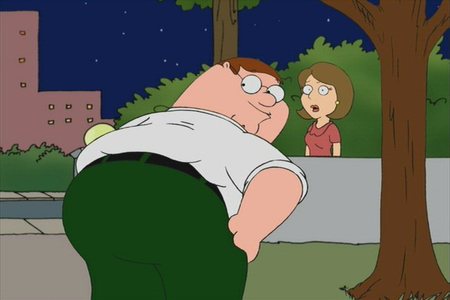
Peter Griffin Flaunt it

Peter flaunts it

I’m going to try to keep this post short and sweet, just like the HR/Recruiting experts I trust, love, adore, and am friends with say a 20 somethings resume should be.  In writing this post I’m going to keep my thoughts to a minimum, take out important details from what I’ve learned in my recruiting experiences, and bunch everything together so that I don’t go beyond 375 words (or one page).  Doesn’t that sound just like your resume writing strategy?  Yep, it does.  Yikes.

Before going too much further, please realize I’m not advising to go write up a 5 page resume.  I’m not for anything that is a waste, so after reading this quick rant you definitely shouldn’t go nutty banana party on your resume, stretching it for pages and pages.  Don’t do that, idiot.  Just…listen.

Not all college students, but a portion of of them are involved in leadership positions, activity programming boards, and work internships, all while making the Dean’s List, studying abroad, and getting inducted into their programs honors society.  As a recruiter, I want to know every bit of that delicious shit.  I want to see every leadership position.  I want to know activities you planned on campus, and I definitely want to know which internships, and how many you took on while a full-time student.

Flaunt it, baby.  Flaunt it.

Don’t hold back.  Let us read the goods.  List everything worth mentioning, which means it shows your value to the company.  Provide details, but don’t write bullshit either.  With every addition to your resume, ask yourself, “Does this prove my value?”  If yes, then please include.  If no, then take it off.  So simple.

No one expects that you have the experience to warrant more than one page.  If you really do, then prove them wrong.

What’s your opinion?

Do you think I’m a jackass?  Great, tell me that, and make sure you tell me why.

HR/Recruiters –  Do you seriously discount skilled candidates if their resume is longer than a page?

Current and previous job seekers – Do you only use a one page resume?  Why?  Who brain washed you?

{ 4 trackbacks }

uberVU - social comments
January 8, 2010 at 1:45 pm
Does Size Matter- « Martin McDonald
January 11, 2010 at 2:04 pm
Look Ma, No Grammar! Why the Recruiter Trashed Your Résumé | Recruitalicious
January 13, 2010 at 10:39 am
Resume Revamp « Sassy and Classy
January 22, 2010 at 2:05 pm

{ 100 comments… read them below or add one }

1 Fran Holm Hogan January 7, 2010 at 7:27 am

There is no one size fits all when it comes to resumes. A college grad with internships and honors does not need more than one page to list achievements. An experienced executive has a lot more to sell.

If the first page – actually the first half of the first page – grabs the reader’s attention then a second page doesn’t hurt someone’s chances of getting an interview. If the second page is needed because you are listing jobs & descriptions that are redundant and not adding any new information……then stop writing! Step away from your computer and give the job to a professional.

Puleeeez……..Can we really disqualify a qualified person because the recruiter or hiring manager has to read past one page???? If your 2-page resume is being read by a Recruiter that is this short-sighted don’t worry about that job….is not for you.

Reply

2 Rich DeMatteo January 7, 2010 at 10:33 am

Hey Fran – thanks for your thoughts on this. I think its rare, but some students take on a mass amount of internships like (Lauren Berger, she took 15 internship in college). Lauren said she still managed to keep her resume to a page. I respect her and think she’s wonderful but I think that’s crazy.

One thing that I also think people forget to consider is that resumes aren’t printed out anymore. Who cares if a resume is 2 pages? It’s not like it’s getting printed out. The recruiter, manager, or HR person will just scroll down using their mouse.

Thanks for your comments!

Reply

3 Ross Simmonds January 7, 2010 at 12:23 pm

I’m personally anti-resume, Id rather see references or hard evidence of the work an applicant has done. Oh the power of Google and Linkedin – How I cherish Thee. But that is a discussion for another time..

After graduation I found myself with a two page resume and found it impossible to cut it down to less than that. I didn’t see it as a problem and neither did any employers – I had the experience and like the title of the post says “If You’ve got it, Flaunt it.” – Thats exactly what I did and to the surprise of the Career coach on campus I landed the first job I applied for.

I think Rich touched on another important part, resumes aren’t printed anymore. They are typically e-mailed or submitted to an online database that sometimes searches for key words and screen out
unqualified submissions. Some employers wont even accept a hard copy of a resume and if that’s what you give them they wont hesitate to throw it out.

Reply

4 Rich DeMatteo January 7, 2010 at 1:27 pm

Hey Ross, awesome story! You stuck with what you believed represented yourself best, and ignored the school career coach. In the end, you proved your value on the resume, even with 2 pages and landed the very important first job.

Someone viewing a resume, literally spends half a second scrolling to the next page of a resume. Wouldn’t they rather see a nicely spaced resume with great detail and experience, than a resume that is bunched together awkwardly on one page? It doesn’t make sense to me. Thanks for bringing that back up for me so I can rant on.

Thanks for leaving your thoughts, and we will definitely talk about Linkedin and Google at some point.

Reply

5 Jenny January 7, 2010 at 9:45 am

I’m really excited that since I just started a gang on my blog today, I will be able to list Gang Chief Member on my resume from now on. That should really open some doors for me. Perhaps those doors will have scary men with tattoos, guns and murder plots behind them, but you have to take what you can get, right?

Reply

6 Rich DeMatteo January 7, 2010 at 10:29 am

Hey Jenny – sure, Gang Chief member always helps. Don’t be scared to list all of the valuable experiences as GCM and go beyond a page!

Reply

7 Sarah White January 7, 2010 at 10:38 am

Rich – Good Post

Fran – I can’t disagree with you more on a college student only needing a 1 page resume. I worked 30 hours a week, did 4 internships, held leadership positions in organizations, did community service (not because it was required) and did a number of other, relevant, extracurriculars. Had I done a 1 page resume, my value would have been cut in half because i couldn’t fully explain what I had done already that 90% of other students in my class had not.

Reply

8 Rich DeMatteo January 7, 2010 at 10:48 am

Glad you stopped by, Sarah. Some early support will be needed once others chime in and rip me a new one. As far as I know, students are still told that being involved looks great on a resume. Why get involved and do anything if you can’t list all of those experiences on the resume?

I have zero problem with 20 somethings resumes being over a page. Especially those that have worked at least one job after college.

Reply

9 Fran Holm Hogan January 8, 2010 at 3:11 pm

Good point Sarah,
All college graduates are not created equal. If you’ve accomplished more than most than you should “flaunt” it.

Another good point I had not considered was what Rich said about resumes not being printed anymore. The number of pages really doesn’t matter.

I love these forums for giving me differnt ways to look at things.

Reply

10 Rich DeMatteo January 8, 2010 at 3:50 pm

Hey Fran – it’s not a knock on them, but some college folks don’t do anything in school except work hard and get great grades. That is awesome, nothing wrong with that. However, some join every club and committee and take on leadership positions. I feel strongly that this should be ‘flaunted’ for at least a few years.

And yes, resumes staying on the computer screen make looking at a 1.5 page resume much easier!

Reply

11 Srinivas Rao January 7, 2010 at 11:35 am

Rich,

I think it’s an interesting debate. I had a roommate who had somewhat limited work experience. When showed me a 3.5 page resume I said “No wonder you’re not getting any interviews.” He had so much useless crap on there it was unbelievable. I think the further away you get from College, the more “value” items change on a resume.

Reply

12 Rich DeMatteo January 7, 2010 at 11:47 am

Srini, useless crap on a resume will hurt someone’s chances every time. They should keep all valuable information, and the rest cut off.

Reply

13 Grace Boyle January 7, 2010 at 11:41 am

I love this debate.

I am on the same page as Sarah – I did 5 internships, held multiple leadership positions, did community service, graduated Summa Cum Laude and was involved on and off campus. I didn’t want to discredit myself and my resume was just over a page when I graduated college. I know it’s always a work in progress but I never had a potential employer mention the length of the resume. They were impressed at some of the smaller details and leadership roles, which often led to our invested interest or learning about not just my professional history but my personal scope.

In life, I love the philosophy ‘If you’ve got it, flaunt it’ and I wouldn’t want to hide the relevant hard-working pieces I’ve undergone professionally and personally. However, I will say, that I do try to work my resume to one page. It just feels better, but I do it by still including all my previous accomplishments…

Reply

14 Sarah White January 8, 2010 at 4:01 pm

Yea Grace! Another person who spent their college years overworked, overextended and likely sleeping less than we should have.

Reply

15 Rich DeMatteo January 8, 2010 at 5:10 pm

You two should start a committee or something…jeez

Reply

16 Rich DeMatteo January 7, 2010 at 11:52 am

Look at you and all of your accomplishments, Grace! That’s incredible, and I’m glad you didn’t limit yourself. Skill is always found, and if skill has a 2 page resume, then so be it.

I can’t keep my resume to a page, just can’t. I always feel like I’m leaving something off, and it hasn’t hurt me thus far. Thanks for stopping by.

Reply

17 Perry Block January 7, 2010 at 12:16 pm

I’m not expecting pictures of busty women. I’m demanding them!!!

Reply

18 Rich DeMatteo January 7, 2010 at 12:34 pm

Sorry, Perry. Maybe next time? :o )

Reply

19 Ryan January 7, 2010 at 12:17 pm

Rich,

Thanks for posting this, reading my mind as I’m going through my resume this AM.

Question: At what point are jobs that are similar, considered redundant. Also, what if you have been involved with the same company for a long time, but have held various positions throughout, do you have to make separate sections?

I mean, just in the last 3 years I’ve held over 7 different jobs in soccer for various clubs, going from volunteer to media relations to owner, then getting that club bought out, moving to a new one, having that club bought out again.

So my resume is insane, plus working multiple part time jobs in soccer aside from that…

Structuring this thing is nuts for me. Would it be better to list skills or what I’ve done and not the 10 places I’ve learned how to do it?

Reply

20 Rich DeMatteo January 7, 2010 at 12:39 pm

Hey Ryan – I’d imagine that as you’ve continued in the same career path in soccer, you’ve developed into more senior roles. It’s tough to say, but I would list just your latest accomplishments (3-4 last positions). I’m sure there is enough detail there to fill at least a page and a half, maybe 2 pages.

If you do decide to list everything, I think that is OK too. I imagine you will stay with soccer based work, and of course that would be all relevant and interesting to the viewer.

When you’ve been with one company for a long time, holding more than a few positions, it may be time to just keep that one company on the resume. If you’ve been there for that long, you are either going to want to stay, or go to a similar organization. Some people may want to try something completely different of course but if it worked for you for so long, why change?

Feel free to e-mail me so we can hash out your resume together CornOnTheJob AT gmail.com

Reply

21 Jonathan Hyland January 7, 2010 at 12:30 pm

Always a great read, Rich.

Everyone has their preferences for resumes, but the bottom line is that resume length isn’t a legal way to filter your candidates (so I really hope you’ve got disparate impact covered if you do). In the case of the collegiate overachiever who thinks more is better, I really hope everything you’ve done is exceedingly relevant to what you’ve wanted to do. Including positions and honors that are just simply in left field when it comes to a position you’re applying for will make the recruiter scratch their head and go “WTF?” as s/he deletes it from Outlook.

If there’s one thing a resume should be, it’s relevant, relevant, relevant. If your 2-page resume is relevant to the position you’re gunning for, fantastic. But if it’s nothing but a list to say “look i r done lots!” it will ultimately work against you if you can’t demonstrate how the experience was relevant.

Reply

22 Rich DeMatteo January 7, 2010 at 12:45 pm

Hey Jonathan – thanks for coming in and bringing some legal flavor to the party. In the case of the collegiate overachiever, I think it’s important they list all of their activities. Relevant or not, it shows that they were involved in their school, held leadership positions, and proved value to their university or college. Usually, those over achievers emulate that in the real world.

In college I was the President of the Roller Hockey Club and held multiple positions in Student Government, including Senior Class President. On top of that I was a Deans List student, was inducted to my honors society, was the captain of my hockey team, and helped out with programming boards. Was being President of the hockey club really that relevant to recruiting? Yes and no. In running a club there is an obvious amount of planning and organizing involved. Being accountable for each member, speaking at club meetings, and making sure everything ran smoothly was part of my duties. This experienced definitely helped in recruiting, and that is why I listed it on my resume.

Once people have been out of college for a few years, then maybe it is time to remove some college activities, but new grads should load it up when they can.

Reply

23 Kenji Crosland January 7, 2010 at 12:54 pm

Although I never liked five page resumes as a recruiter, I would go through them to see if the candidate was qualified or not. If they were, I’d tell the candidate to cut the fluff. Sometimes, however, I’ve seen amazing resumes that really did need 5 pages to tell the whole story. They were THAT good.

Reply

24 Rich DeMatteo January 7, 2010 at 1:28 pm

Those 5 pages must have been magical. Good on you for actually going through and reading it, but I’m yet to see a 5 page resume. I think the most I’ve seen was 3, maybe 4. Thanks for adding to this, Kenji

Reply

25 Lance Haun January 7, 2010 at 3:34 pm

While I am not a stickler to the one page rule, I do love the fact that it forces people to think about impact, relevancy and brevity. I am a big believer that limits and constriction can often lead to better results than just “list everything you’ve done ever” approach because it makes you prioritize and think more in depth about your experience. I think everything you ever done should be captured somewhere (an online portfolio, LinkedIn, whatever) but your resume should be designed to either interest the person enough to access your online portfolio or call you for a job interview. That’s the only reason you need a resume.

So do I have a problem with a two+ page resume? Not directly. A well written one is fine by me even if I won’t read the whole thing. But I don’t like the results of two page resumes, especially for early career professionals. It allows them to be unfocused, to ramble, to include puff words and to include a bunch of things I’m not interested in.

While it may not disqualify you, it makes evaluating your talent more difficult for me. Not only that, if you are allowing me to determine what is most important after a 30 to 60 second scan of your resume, I may miss key accomplishments that were buried under Bookstore Associate Vice President on page two. Making it easier for the person reading it (on an ATS or on print where many hiring managers still like to see them) is always the better option.

And again, a resume simply isn’t going to capture everything you’ve done unless you’ve done nothing. That’s why we interview. Build a document that will explain your experience in enough detail that they want to see your full profile and/or interview you. I can’t stress that part enough.

Reply

26 Rich DeMatteo January 7, 2010 at 11:48 pm

This is why you are one of my favorites. You’ve completely stumped me, but I’m not giving in so easy.

I myself am NOT against one page resumes, just like you aren’t against a 2 page resume, I’m just not a fan of bunched up or resumes that look forced. It is easier on my eyes if it goes to two pages. Besides, I’m not printing it out, I’m going to scroll up and down to read.

The 30-60 second scan is important, and I like that you bring that up. Sure, the more information on the resume, the longer it is to scan over quickly, but if it is solid information and a viable candidate, than I’ll have no problem spending another 30 seconds or so on it.

No one can disagree with your last paragraph. The interview captures everything, the resume is an introduction/summary to the candidate. I do agree on this 100%.

Thanks for your wisdom on this.

Reply

27 Lindsey January 7, 2010 at 5:27 pm

Related question – what is the protocol for emailing a cover letter? Is the cover letter placed in the body of the email with the resume attached or are both pieces attached, therefore creating a tedious 3rd step with an enticing email to CONVINCE them to open either the resume or cover letter or both? I never know which is appropriate!

As for the resume – great insight.

Reply

28 Rich DeMatteo January 7, 2010 at 11:30 pm

Hey Lindsey – tough call, and everyone is different on this as well. I actually like the cover letter in the body of the e-mail, but again people might scream at me for saying that.

Also, many debates on Twitter are proving that many folks (like me) just don’t read cover letters. I may glance at a cover letter after I find an awesome candidate, but when things are busy I tend to avoid them.

Reply

29 Lindsey January 9, 2010 at 12:46 pm

Well now that isn’t very reassuring! There’s so much pressure to write a clever, grabbing and winning letter to show how great you are (and it seems to be one of the biggest causes of frustration during the application process) and yet it is overlooked? Why don’t HR professionals just come up with an appropriate strategy that everyone can follow that will guarantee at least a quick evaluation? Then for all the dopes that can follow instructions, they’ll be ruled out immediately! ok, just a thought :)

Reply

30 Rich DeMatteo January 9, 2010 at 1:04 pm

To be able to grab every HR person in the world and make a change like that would not be easy, obviously. Also, each organization has their own set of standard procedures when it comes to interviewing. And, many recruiters do read them, I don’t. Thanks, Lindsey!

Reply

31 Lance Haun January 8, 2010 at 9:27 am

Lindsey,

My preference as a reader of resumes would be for you to put it in the e-mail body. For more formal organizations, a separate document might be a better bet.

That being said, I read cover letters based on how the resume went. But I did read them whether they were in the body or a separate attachment.

Reply

32 Lindsey January 9, 2010 at 12:47 pm

Thanks for your opinion Lance! It’s definitely a question I4ve wanted answered for quite some time!

Reply

33 Sarah White January 8, 2010 at 4:05 pm

Agree with Rich and Lance. I hated reading cover letters as they were mostly generic and didn’t provide a lot of value. I instead would do it in the body of my email and make sure that the cover level addresses your experience as it relates to the specific requirements laid out on the job posting. This answers any questions that may or may not exist there.

Reply

34 Rich DeMatteo January 8, 2010 at 5:11 pm

Cover letters are so awful. I hate them, unless it’s for a writing job.

I’ll read them once I find a candidate that looks like they fit the job, but other than that, they just annoy me.

Reply

35 Lindsey January 9, 2010 at 12:47 pm

Glad to have so much perspective on this issue! Thanks Sarah!

Reply

36 Sue January 7, 2010 at 6:01 pm

I work with college students all the time helping them on their resumes, and this questions comes up constantly. I’ve seen the most accomplished students who have done every possible activity/internship manage to fit their relevant experience – wish I could bold the “relevant” for you – onto a one page resume, and a student who did nothing but hang out with his frat buddies for four years somehow “needed” a two page resume to explain his “awesomeness” (his word). In my opinion the relevant experience dictates the length of the resume. Is it helping prove your capability to do the job? Include it. Is it just making sure you haven’t forgotten something? Cut it out – a resume is not a history of everything you’ve ever done.

Reply

37 Rich DeMatteo January 7, 2010 at 11:38 pm

Hey Sue, I agree with you on that, I do. A resume should not be an auto-biography. With that said, I like a clean format, with a portion of white space for my failing eyes. Obviously, the college party guy with a 2 page resume probably had a fair share of fluff on the resume, and that’s why he might not have been hired. If he had 2 pages of relevant experience and accomplishments then I don’t think it would hurt him at all.

When I was senior class president, that was like having a job. The activities that I planned were very relevant. My resume wasn’t over a page, but that’s because I never had internships. If I were to have had at least one internship, my resume would have been over a page, and people would have still hired me.

Talent is always found in my opinion. Talent makes sure that their skills are listed, and people easily pick up on skills.

Reply

38 Sandy January 7, 2010 at 6:21 pm

Great post! I always wonder if my resume is too long, but I am unsure of how to shorten it. In my case, and probably many others who are not typical college grads, I’ve got about ten years worth of work history before college and then college/internship/volunteer history, plus I’ve held different positions in the same company (twice). I have trouble keeping my resume to one page. Maybe your readers are applying to jobs of a different caliber than the ones I apply to, but I’ve often seen potential employer’s applications ask specifically to list different positions at the same company separately.
Also, many places ask you to explain any gaps in job history as well…. In my opinion, that makes Fran’s advice about not listing jobs that are ‘redundant’, bad advice. Do gaps in employment history look better than too many similar jobs? I mean, if you’ve worked in one industry most of your life, many of your job descriptions will be similar…. you were hired because you have similar (redundant?) experience, right?

Reply

39 Rich DeMatteo January 7, 2010 at 11:44 pm

You make a great point about at the end about how redundant experience is actually what employers want. Great point, Sandy! I think in your case, it’s best to highlight as much as you can, and try to keep it within 2 pages. I see more 2 page resumes, than 1 page resumes and that is a fact. If you can find a way to keep it to 2, then with 10 years of experience you shouldn’t have any problems with readers.

Thanks for your two cents.

Reply

40 Fran Holm Hogan January 8, 2010 at 5:07 pm

Let me clarify what I meant about it being redundant to list similar jobs. I should have written “repetitive job descriptions”. I see resumes that have the same job title & bullets repeated down the page. Same description, different company. It doesn’t add value and your eyes glaze over reading it.

Gaps should definitely be covered but it’s laziness to just repeat the same bullets and phrases. Every job has something different about it. If all your jobs were exactly alike then use some creativity and describe them differently.

I also recommend that different positions at the same company be listed…..it shows progression of responsibilities.

Your resume should be more than just a list of what you’ve done. It often acts as your only foot in the door. It has to be a marketing tool – as attractive and compelling as you can make it.

Reply

41 Rich DeMatteo January 8, 2010 at 5:14 pm

Fran, I like what you say about listing the different positions at the same company.

I think what makes it hard on people is when they’ve been with a company for 12-15 years (rare these days) and have held 7 jobs. Do they list the jobs they first had with the company from 15 years ago, or just the last 3-4?

My suggestion is to list the most recent jobs from that company. Any organization worth their salt won’t be looking for job gaps from more than 7 years ago. If they see someone has been with one company for over 6-7 years, loyalty won’t be in question.

Again – great thoughts! Thanks for adding value to this post.

Reply

42 Matt Cheuvront January 7, 2010 at 6:53 pm

I can see both sides here – I used to HATE the one page rule but like Lance said above, it does really force you to think about your value and summarize THE most important things you have done in your career. I think the resume should be a concise summary – let your Cover Letter be where you show some more personality – and let your face to face interview do the rest.

Also worth noting, I HATE tweaking my resume and writing cover letters, just saying. I really cant stand the “traditional” interview process. I see it’s necessity, but blah, not a fan.

Reply

43 Rich DeMatteo January 7, 2010 at 11:41 pm

Matt – Lance is one of the smartest HR folks I know, and I respect him a great deal. He has made some great points, which still have my mind searching for a counter.

You mention the cover letter, but in high volume recruiting, most people don’t read cover letters. I know I haven’t, or if I did it was for a position that involved heavy writing, like a Marketing Communications Specialist.

Traditional Interviewing is necessary for most larger organizations. The legal aspect makes it a bore, I know, but it is definitely necessary. Thanks for your thoughts.

Reply

44 Matt Cheuvront January 8, 2010 at 4:28 pm

Necessary? Yes. Lame? Also yes. But maybe that’s why I never plan to find myself with a very large company/organization. Hell, if I never had to interview again that would be great! :) Good discussion going here.

Reply

45 Rich DeMatteo January 8, 2010 at 4:41 pm

Some organizations (SOME) can do it up in an exciting and challenging way. I really pride myself on the behavioral interview process that I put together at my time at the last company. It took a lot of training of the managers, but eventually we got it.

We were able to ask candidates what they HAVE done, instead of what they WOULD do. I think this approach is more exciting for you as the interviewer because you can talk about the experiences you’ve already gone through, which helps to show how you would perform in similar situations in the future.

With your plan of staying away from large organizations, you may be able to sneak away from formal interviews, and also, your work with LifeWithoutPants.com will take you far. Thanks!

Reply

46 Royce January 7, 2010 at 7:26 pm

As a job prospect I ALWAYS keep the resume to one page – it just feels 1,000 times cleaner and easier to carry and present to people. I do however fully agree with you that the point of a resume is basically to brag about yourself as much as possible. Anything good that you’ve done, ever, should be on there.

Although I have been told not to put college accomplishments on there (I’m 3 years out of school right now), such as Latin Honors and such. Is this true? Do recruiters not want to see that? Is there a reason?

Reply

47 Rich DeMatteo January 7, 2010 at 11:35 pm

Hey Royce, sure it is definitely easier to pass out plus there is no need for staples, but I really think if you have valuable experience to share then you need to put it on.

Your Latin Honors might not mean much to someone, but I don’t think it will necessarily hurt you if you insert it into your resume. As long as you have other relevant experience, I would say it is a plus that you have those honors.

Reply

48 Royce January 12, 2010 at 11:45 am

I’m impressed by the 100 comments on this blog, well done Rich

Reply

49 Rich DeMatteo January 12, 2010 at 11:51 am

Hey Royce – thanks! The discussion was driven by my “Corn Heads” and everyone here contributed. If I can write something that encourages learning and growth then I am doing my job. This was fun for me to see all of the responses and learn why people feel a certain way.

Hope all is well!

Reply

50 James January 7, 2010 at 7:50 pm

Just wondering… what if you know your resume is going into an ATS, would more pages help if the right keywords are used, or can ATS be set to only accept one-pagers?

Reply

51 Rich DeMatteo January 7, 2010 at 11:33 pm

Hey James, as far as I know, an ATS isn’t set for pages, but definitely key words.

If someone uses more than one page, filling page 2 and 3 with BS, then key words really won’t help. It may help them get noticed, but once the recruiter reads the BS resume with key word fluff, then I think it’s time for the resume to visit mr. shredder

Reply

52 Dawn Lennon January 8, 2010 at 10:58 am

Ditto on the absurdity of the 1 page only resume. Another bad rule from someone who doesn’t get that a resume is a marketing/branding tool that differentiates you from everyone else. Great resumes tell your story professionally and with color.

I worked with a college student who thought he had nothing to offer on his resume. He’d taken odd jobs for spending money summers and had a couple of internships that were thin. However, he’s been everywhere…done Outward Bound in Alaska, holed up overnight alone for 36 hours in an ice cavern, no food, and armed with bear mace! He’d studied abroad, taken multiple Back Roads tours in Europe, Canada, and New Zealand. His adventure, leadership, global view, and communication assets made for a really cool resume! Yup, I got him to “flaunt” it, just as you said!

Reply

53 Rich DeMatteo January 8, 2010 at 11:19 am

Wow, Dawn, I love that story. I don’t enjoy being alone in the house for 10 hours without food, so I’m positive I wouldn’t survive in an ice cavern in flippin’ Alaska. Wow.

He used what he had to offer, and I’m sure someone out there found it interesting. Many folks might be against him using that on the resume, but if it is all he had to show for, then I’d say go for it.

Thanks for sharing!

Reply

54 Melissa Moore January 8, 2010 at 3:39 pm

While I wouldn’t discredit any candidate from having a lengthy resume, I have yet to see one that was well articulated, relevant to their unique skills and abilities, and one that can hold my attention past page 3. Few applicants have mastered the art creating interesting and relevant 1 or 2 page resumes much less adding on page 3,4 or 5.

It would certainly be reasonable to argue that information written on page 3,4,5 and 6 will have a diminished impact on a recruiter than the information/qualifications provided on the first page and thus undervalue some key qualifications.

I could also argue that a resume shouldn’t tell me EVERYTHING. That is what the interview is for. I want to be intrigued to call a candidate and excited to learn other great attributes during the interview. You know…its kinda like dating. Pretty sure if I got the whole life story on a first date there probably wouldn’t be a second :)

If an applicant has the analytical ability to compose a long resume that is relevant and interesting and well organized…sure. I just doubt that many applicants are so blessed with the resume writing skills of that caliber to successfully pull it off.

Great post Rich, and very interesting comments.

Reply

55 Rich DeMatteo January 8, 2010 at 3:56 pm

Thanks for your thoughts here. OK, I think we can all agree that it’s not fun to read a resume, even if its 1 page, so 5 pages is just torture. I’m not a resume reading fan, I don’t enjoy seeing a stack of 80 on my desk, but they are a necessary evil, so I go through them.

Also, love how you brought up dating. It’s well documented that I’ve discussed the similarities between job seeking and interviewing with dating, and the similarities keep coming.

Reply

56 JR Moreau January 8, 2010 at 3:50 pm

Interesting post Rich. I personally feel that my resume should have the high level basics on there. I’m looking to develop a relationship with potential employers when I’m applying to jobs, not try and figure out a way to get them to know me in 1 minute. I’d rather have a solid list of my accomplishments, experiences and skills on 1 page of a resume and then have links to all of my social media networks where people can really dig around and figure out if I’m their man or not.

Reply

57 Rich DeMatteo January 8, 2010 at 4:00 pm

Thanks for jumping in here, JR. You bring up a good point. A resume can/should direct a possible employer to your viewable online work. Whether it’s a link to a blog, portfolio, or linkedin, it’s always a good way to direct them for more information when they have interest.

Reply

58 Caitlin January 8, 2010 at 3:52 pm

I used to think that the one pager was a rule set in stone but as I’ve had more experience I have had to extend it out a little longer than 1 page.
I would say if you don’t have a ton of experience then it should be 1 page, don’t embellish or fluff. If you have a project that you’re really proud of and you need a little more room to explain it then do so.

Reply

59 Rich DeMatteo January 8, 2010 at 4:05 pm

I agree with you completely, Caitlin. As long as something is important to you, and it is something you are proud of, then it should definitely be on there. Even if it isn’t 100% relevant, it still shows who you are. Thanks for the comment!

Reply

60 Jessica January 8, 2010 at 11:17 pm

Ugh, see this is what I like to hear! My resume is a little over 2 full pages, and I’ve been editing it down to one depending on the job I’m applying for. However, no matter what I do, I end up leaving out a TON of stuff. Stuff that’s important to me and I think would be important for that person to know. The problem is, how do I figure out if it’s okay to send a longer resume?

Reply

61 Rich DeMatteo January 8, 2010 at 11:29 pm

Hey Jessica – list for me the activities you’ve taken a part of besides classwork. In short, just leave everything that you believe shows your value to an organization. I’m OK with resumes being over 1 page for new grads, but over 2 is definitely pushing it.

Respond back to let me know exactly what you want to keep in…

Reply

62 Jessica January 9, 2010 at 12:17 pm

Would you mind if I just e-mailed you my resume and if you had time you could let me know what you would consider irrelevant?

Reply

63 Rich DeMatteo January 9, 2010 at 12:35 pm

I’ll take some time to look over it, Jessica. Probably won’t get to it this weekend, but I’ll make sure to spend 5-10 minutes reviewing. Send it to CornOnTheJob AT Gmail.com

Reply

64 Samantha January 9, 2010 at 12:15 am

Hi Rich,

This post has blown up. Nice (corn on the…) job. Get it? I bet that’s the first time you’ve gotten that joke. Moving on…

My resume is currently resized into oblivion, but that’s because I’ve always been told that having a resume over one page will make recruiters bored. I see pros and cons to both sides. While I want a recruiter to see my expertise, I also know that if I were a recruiter, I would value concise expertise – no filler. I see a lot of students that tend to put filler on their resume, and that’s just as bad. I think applicants tend to temporarily forget that recruiters have more than one resume they’re looking over.

With that said, my resume has never hurt me advance professionally (at least I think), because I only put the best of the best of what I’ve done on there – half of what I do doesn’t even make it on. I also think it’s important to articulate that a resume gets you to an interview. It doesn’t get you the job. Rock the resume and cover letter, and you get full VIP access to shine when you meet the recruiter face-to-face.

Look forward to reading more from you.

Sincerely,
Sam

Reply

65 Rich DeMatteo January 9, 2010 at 1:01 am

Hey Sam – Thanks for the corny joke. Usually I wouldn’t allow it, but this is a corn themed employment blog. It can stay.

Not going to lie, a lot of resumes are sent our way, even when the job market is like present times. The one page resume is quicker for us, so long as information isn’t scattered all about and forced to fit. Not saying that is what you do, just making that clear.

I like your attitude/thoughts on ’shining’ once you make it to the face-to-face. Without strong interviewing skills the resume will mean nothing. Backing up what’s on the resume in person is obviously all that matters in the end.

Thanks for leaving your comments, Sammy. Hope to hear more from you soon.
Richie

Reply

66 Rebecca January 9, 2010 at 12:46 pm

Hi Rich,

This is a great post, and I enjoy the discussion happening here.

As a soon-to-be college graduate, I’m starting to evaluate my resume and decide what’s relevant and what can be cut.

Most of the professionals I’ve talked to encouraged keeping my resume one-page long, but many have differing views. I wonder what role social media plays in the length of my resume. For example: Is it okay to keep job/leadership descriptions short and concise on a paper resume but elaborate on my LinkedIn profile?

Rebecca

Reply

67 Rich DeMatteo January 9, 2010 at 12:49 pm

Hey Rebecca – Yes. Definitely!

Use your resume to summarize your leadership positions, then make sure to mention links to social media at the bottom. Make sure to leave a solid summary of your positions, so that it will entice them to head on over to your Linkedin profile.

This is sort of how it works with cover letters for me. When I read a resume, I won’t open the cover letter unless I really feel like it. When there are 100 resumes for one position coming through my desk, there is simply not enough time to read both. If you look like a fit and interest me, then I’d open your cover letter and check out your linkedin before sending off to the hiring manager for that position.

Thanks for stopping by – I hope you come back more to leave comments!

Reply

68 Sean Cartell January 9, 2010 at 12:54 pm

Thanks so much for writing this article! I completely agree and have always been so opposed to those who demand 1-page resumes. No two people out there are alike, you can’t fit every job applicant into a certain type or formula, so why should you force each applicant to have uniform resumes? In fact, the resumes that most get noticed are those that stand out.

One of the best resumes I ever saw was actually close to five pages. The first page of the resume was genius – it was that stereotypical one-page resume that summarized education and seven different full-time jobs as well as a summary of qualifications and skills. The remaining pages provided details of those various experiences to break down what the job candidate had done and was capable of doing. All of this showed the potential value the candidate could bring to the organization.

This was a win-win resume because if the hiring manager wanted a concise 1-page resume, they had everything they needed and wouldn’t have to print off any additional pages. If they were interested and wanted more, they had that too.

Reply

69 Rich DeMatteo January 9, 2010 at 1:00 pm

Sean – thanks for your thoughts. No two people are the same, and that is definitely the case with graduating students. Wow, 5 page resume genius? Seems like he/she found a way to send almost 2 resumes in one, which is clever, but risky. Worked out in their favor so I can’t say anything negative about it.

Reply

70 Executive Resume Writer January 9, 2010 at 1:08 pm

Do I think you’re a jackass? Not at all… well, sort of. I’M KIDDING.

I would absolutely NEVER cut out information just to keep it to 1 page. I agree with you on leaving in associations, internships, etc. All that is so important and shows the reader the clients motivation/ambition.

I recently did a resume where the client had 5 pages of really interesting and relevant info (um, yea-a bit much). I hesitated leaving anything out, but managed to get the majority of it onto 2 pages (omitting projects from high school).

It was very impressive (I was not that ambitious in college, I just wanted to graduate– LOL) regardless of it being ‘more than one page’ or not. If I left anything else out, the resume probably wouldn’t have sounded so good.

So, my bottom line and overall thought about ‘1 or 2 pages’ ends with this: If the experience warrants it, then leave it in. If it isn’t relevant to what you want to do, leave it out.

Have a great weekend!

Erin (@erinkennedycprw)

Reply

71 Rich DeMatteo January 9, 2010 at 1:12 pm

I was waiting for a pro-resume writer to chime in! Thanks for stopping by Erin.

Paragraph 1 – Score 1 point for me :o ) – Never leave out information that is important. Associations, internships, etc. It is all important. Glad you agree on that.

How long did it take you to cut the resume down to 2 pages, from 5? I can’t imagine the head ache involved, but you managed to cut it down to a very reasonable 2 pages, while also keeping his/her value in the resume.

Enjoy your weekend, hope to see you back here more!

Reply

72 Executive Resume Writer January 9, 2010 at 1:11 pm

Correction: “…would absolutely NEVER cut out RELEVANT information, just to keep it to 1 page.”

Erin

Reply

73 Rich DeMatteo January 9, 2010 at 1:13 pm

See that everyone, that’s coming from a PRO resume writer. “absolutely NEVER cut out RELEVANT information, just to keep it to 1 page.”

Reply

74 Executive Resume Writer January 9, 2010 at 1:22 pm

I usually don’t like to say NEVER about things because it will come and bite me in the as#! LOL

It took a while to cut the resume down from 5 pages to 2, but in truth he had it spread out pretty bad. I just condensed, grouped, stretched and shortened. His info really spoke for itself.

I didn’t read any of the comments yet, but it sounds like we are in the minority?

Take care.

Erin

Reply

75 Rich DeMatteo January 9, 2010 at 1:27 pm

Erin – skim through the comments and leave your thoughts on some where you think WE’RE right. There is a solid, healthy & friendly debate going on. I’d say right now its 60/40 in favor of keeping a resume to ONLY one page.

Reply

76 Shane Mac January 9, 2010 at 1:14 pm

I think of the resume as a pointer. Length, experience, leadership, interesting stuff, etc… there is no one size fits all answer for any of that and the best thing to do is try something new if it is not working. Here is what I believe…

A resume should inspire the reader to want to learn more because what you did seems so incredibly awesome that they can’t help but check it out. Give the HR somewhere to look, somewhere to go, and use the resume as a launching pad. Clearly tell them that they should check it out HERE or THERE. Your goal should be to distract the hell out of HR for 30 minutes. That’s when you get the call or interview. They can get through your resume quicker than any of the others but since they liked what they read so much they had to go learn more AND they had a place to go.

What if you don’t have somewhere to point them? I truly believe that many people could save a lot of time looking for jobs and avoid low level job positions if they spent a few months or even a year building and creating something that they believed in. Instead of sending out resumes for the next 6 months and not getting the job offer or interviews that you want, spend 6 months building something, anything, that you can point at forever. Whether that be a blog, a charity, a business, it doesn’t really matter. Remember this: Job titles are made up names. If you start and build your own thing then you can be whatever you want. If you go to godaddy and buy a URL then you are the FOUNDER. Likewise, if you have a lemonade stand on the corner then you are a business owner or CEO or President, whatever you want. It seems weird at first but trust me, it is that easy. You think lemonade stand sounds dumb right? Coffee Shops did at one time too… :) It’s the principle and traits of building something that set you apart not to mention the job title you give yourself by doing it. You won’t think of it like that right away but trust me, Founder on your resume will trump everything, especially if you have passion for it.

Reply

77 Rich DeMatteo January 9, 2010 at 1:25 pm

Shane – yep, resume is a pointer. Up above, Lance made the point that resumes are just starting points and in the interview they find out everything about the candidate.

Distracting an HR person for 30 minutes, won’t happen in the screening stage. It won’t. Recruiters these days have too many candidates to review and a half hour is what like already 1/16 of their day. You’ll be lucky to distract them for more than 5 minutes. Viable candidates may get 5 minutes (if that), and candidates not matching the job will get 30 seconds to a minute.

I like your energy and desire to push people to start up something. The founder title will always generate even a little interest, but it won’t always mean that the candidate will get a job. It depends what job you are applying for. If someone is applying for a technical support job, Founder on the resume may mean absolute shit in that situation, but it won’t hurt.

Reply

78 Shane Mac January 9, 2010 at 4:45 pm

Totally agree with your points… (I was telling more of a fisherman’s story) 30 minutes was just meaning… make them interested in you. About the Founder, CEO, etc… I really am just passionate about building and doing something so that you have something to share with the HR folks.

Your posts is on commenting craziness! Nice work!

Reply

79 Rich DeMatteo January 9, 2010 at 4:54 pm

Think you are on the right track with building something to share. Also, you’ve spoken before about finding other ways to connect to people, perhaps offering a service to them is one. I think your innovative ideas will help you now and in the future. Great ideas and wonderful value add to this post. Thanks.

Reply

80 Steph Auteri January 9, 2010 at 1:16 pm

Okay, I’m going to jump in here. (Days later…)

I’d first like to echo what the ever-so-wise Matt Chevy said above: Most resumes look pretty much the same after you’ve been looking at them for awhile; the cover letter is where you should really let yourself shine.

Seven years out of college, my work experience cannot possibly fit onto one page. So this is what I do: I have a master resume that I display on my professional website, and that I keep on file. Then, whenever I have to send my resume off to a possible employer, I tailor it carefully for the position I’m applying for. If I’m honest with myself regarding what is and is not relevant, I can usually get it down to one page pretty easily.

I know that every HR professional and hiring manager has their own preference, but I’ve been asked to keep it to one page by so many temp agency contacts and prospective employers that I now do it consistently just to be safe.

Reply

81 Rich DeMatteo January 9, 2010 at 1:21 pm

Glad to have you here Steph…never too late.

Cover letters are great for a secondary interest point. I don’t look at them until there is interest. I don’t care to read a full letter, I don’t. Do I go to HR Jail? No. Most recruiters will say the same thing when they are busy.

I like how you tailor the resume for each job. That’s something that people only do for cover letters usually, so you doing that for the resume is impressive.

When something is relevant, never take it off. If you know that you can take many things off and get to a page without sacrificing value and quality, then go for it!

Reply

82 Mitchell Savage January 9, 2010 at 1:30 pm

I have 25 years of experience, have started and sold three businesses, hold both undergrad and graduate degress, have worked in three industries, have worked internationally, and my resume is _one_ page long. I accomplished this by editing well, and therefore, my resume is dense enough to show that I am not puffing.

There is one reason to have a two-page resume: because you’re willing to have the recruiter know that you do not care about their time. When I am hiring, I look very dimly at the people who don’t care about my time enough to articulate their attributes concisely, (especially the ones who claim to have strong writing skills! Always a source of a good laugh.)

I agree with Rich: “If you’ve got it, flaunt it.” My one-page resume does so by showing the hooks from _all_ my experience and training, including community and personal stuff. My resume also shows my strong writing skills by accomplishing all of that in a single page, easy for readers and dense enough to make them want more, not less.

Whatever you think belongs on the second page of your resume actually belongs in the interview. As a manager whose role includes hiring, I am telling you frankly: your failure to edit is costing you interviews. Period.

Reply

83 Rich DeMatteo January 9, 2010 at 1:37 pm

Mitchell, thanks for leaving your thought on this and some valuable insight into how someone with a great deal of experience can cut it down.

While I think it is great that you were able to pull it off, I don’t necessarily agree. Many times I see a second page as a way to make it easier on my eyes, which I appreciate. If the fluff is present, then you can easily pick up on that and move on from the resume. Fluff is noticed right away on the first page, not on a second page.

I don’t agree with your last sentence. I’ve green lighted interviewing and hiring on hundreds of candidates who had more than one page of a resume. You seem to be on the extreme end, but this is exactly what I want to hear from this discussion. People need to realize that there are managers out there that DO feel like you and won’t review resumes that go longer than a page. I don’t agree with it, but I understand that there are many folks out there who feel that way.

Appreciate your response and experience. Hope to have you back here more.

Reply

84 Mitchell Savage January 9, 2010 at 8:13 pm

Thanks, Rich. To be clear, I don’t automatically disqualify a candidate who used two pages. (I’m hiring someone next week that had a two-pager.) But to me, it’s a strike against the writing skills category.

Reply

85 Rich DeMatteo January 9, 2010 at 10:48 pm

Thanks for clarifying, Mitchell. I can understand your point in a strike against writing skills. What if the job is a non-writing position? For instance, a technical support rep would have minimal to zero writing needed to perform the job well. Would they still lose points in this situation?

Reply

86 Karen Siwak January 9, 2010 at 2:04 pm

There is no one-size-fits-all rule on resume length. I’ve had senior executives with 20+ years of experience for whom I’ve created a kick-ass resume that was one page. I’ve had a 14 year old who had so many awards, volunteer experiences, companies that she started, etc., that she couldn’t be presented in less than two.

If you are starting your resume writing process by deciding the number of pages, then you are grabbing the wrong end of the stick.

Start by figuring out which of your accomplishments – academic, professional, community, personal – are going to be relevant to your target audience, and then find the most clear and succinct way of saying it.

What is relevant when you are applying for temporary or junior-level contract positions is going to be different from what you need if you are applying for entry-level career-track positions. New graduates often have to pull from more areas of their life than more seasoned professionals, because they have fewer jobs (or more precisely, fewer relevant jobs)

Always think always in terms of what your target audience wants and needs to know. For every word and phrase you use, go through a ruthless editing process. Ask yourself the “so what” question for each bullet. If you can’t answer it, it doesn’t belong on your page.

Only after you’ve got the content defined should you start figuring out how best to present it. For some people, its going to take two pages. For some people, it can be done on only one (here’s a link to an example of a new grad, one pager, for those that are interested http://bit.ly/7l4zgy).

There is a diminishing return on visibility of content, especially once “a human” is involved. The further down into the document a key fact or piece of information is, the less likely it is that this information will get noticed. If its important for the target job, find a way to make it front page news.

A final thought. The best format will also depend on the job search strategy you intend to use. If you mostly intend to apply online to advertised positions, your resume will need to include all the relevant keywords to make it through candidate screening software. This is often hard to do on only one page. If you will you be networking your way to your next position, you may be better served with a more tightly written and presented one-pager.

If you intend to have a multi-pronged job search strategy (highly recommended, by the way), consider having different versions, with different lengths, for different purposes. After all, it is a marketing document. You don’t see companies tying themselves to only one piece of marketing collateral. And neither should you.

Reply

87 Rich DeMatteo January 9, 2010 at 2:31 pm

Hey Karen, appreciate you leaving your expert opinion on the topic. I could write pages on pages in response to your comment, but you’ve said it so nicely!

I really like what you say in regards to applying to jobs through postings or through networking. Even those who tend to simply network, should make sure to have some key words. Even in networking, their resume gets distributed somehow to a recruiter/manager and then that resume may be entered into the system. If they don’t receive the job from that company at that point, a strong key word resume could bring up their name in the future.

Thanks for adding value to this!

Reply

88 Debra Wheatman January 9, 2010 at 2:30 pm

Here’s my 2 cents: There is no right or wrong answer for resume length. If you can sell ‘it’ in one page great. If not – and many people with longer work histories will have more to say, two pages might work for them. At the end of the day, the resume that gets you the interview is the one that works! It could be two pages or one page.

Reply

89 Rich DeMatteo January 9, 2010 at 2:36 pm

Bring on the $ Debra – we’ll take it! Some people above would say that the 2 page resume will stop them from reading further and may even disqualify you from the job, but that is NOT what I say.

People are different, so resumes are different. People explain their skill differently, but when people are skilled, they will be found. Unless of course they don’t know how to write, and can not edit their resume at all…

Reply

90 Jacqui Barrett-Poindexter January 9, 2010 at 3:52 pm

Hi Rich,
Superb article and conversation!

Love Erin’s, Debra’s, Karen’s, et al’s heartfelt replies.

My take: Resume’s initial purpose–grab attention and compel the phone call. Ongoing purpose, fuel the interview conversations.

If arbitrary rules about resume length are used as success measuring tools, then the resume author has lost sight of the goal. The ferreting process to result in a highly targeted, clearly focused and resonating resume is complex, exhausting and intellectually rigorous. For those reasons, and because most people are ‘lost’ when navigating the resume writing course, 2+ resumes that emerge often are unfocused, blathering and, thus, are passed over.

With a crystallized message that says, “I can fix your problems and even those emerging problems that are yet to erupt,” a meaty, meaningful resume (regardless of length) will SELL the candidate, and equip the recruiter, HR leader and hiring manager to make nimble, long-lasting and ROI-focused decisions.

My 3 cents!

Reply

91 Rich DeMatteo January 9, 2010 at 4:02 pm

Thanks for your 3 cents, Jacqui, this post keeps brining me more $ and I love it.

An on-going theme in this discussion has been that the resume needs to push further contact. I think that is something that everyone on this list agrees with. No matter how long the resume is, it needs to find a way to push for a phone call or interview so that we can expand on our resume and show who we really are.

You make your point that most 2+ page resumes are unfocused and blathering, but those that pull it off, while not installing fluff or BS can just as easily grab a phone call or interview from their resume, which will help a healthy ROI to both recruiter and candidate.

Reply

92 "Recruit4U Guy" January 11, 2010 at 9:24 am

Great thread..I admit I did not read all..but here is my “corncopia” of comments…

WIIFM- “what is in it for me”…when I read a resume, if I can’t answer this as the reader..it goes in the B pile.

SWWC- “So what who cares”…..if after I read it and say SWWC..it goes in the B pile..Too often candidates write very eloquent job descriptions…and write 3-5 job descriptions. It is not the over usage of action verbs and nouns, but rather, adding the Oprah ….ahh…hah factor or WOW factor. Show me your successes and how they can translate in being successful for me and my clients..Not easy for most folks but a great goal to work towards in completing your resume. Great Blog….Steve

Reply

93 Rich DeMatteo January 11, 2010 at 9:52 am

Hey Steve – thanks for stopping by. WIIFM and SWWC are great and an interesting way to look at resumes. Doyou keep a C pile as well? Some people do A, B, and C, especially at job fairs.

Reply

94 Recruit4U Guy January 11, 2010 at 5:40 pm

A, B or C…really with the volume of resumes right now A or B…but I did take the time and make sure there is a differance between A or B, sometimes it goes to C and beyond…

Seriously, if someone can really sell their Value proposition, then the length does not really matter, and of course if they could do that recruiters and resume writers would be out of work. Keep it up…great job and let’ s connect..Nice job!!!!

Reply

95 Rich DeMatteo January 12, 2010 at 2:31 am

Hey Steve, thanks for getting back to me on this. A and B is definitely easier right now with the high volume recruiters/staffing is experiencing. It’s understandable and I’m sure needed.

Looking forward to connecting this week, I’ll reach out to you shortly!
Thanks.

Reply

96 Marty January 11, 2010 at 1:58 pm

The debate that never dies “does size matter”. I have been reading resumes for 12 years and writing them for the past 4. To sum it up, to each his own, I have heard the pros/cons over the years and the best advice I can give is to be honest and be sure it represents your accomplishments.

Resume length, in my opinion should be kept to a minimum (this will vary for each indvidual) and showcase accomplishments. I have seen awesome resumes for college graduates that are 1 pagers and a few with great accomplishments that were 2 -3 pages long. Best advice: Read your own, If it bores YOU. It will most likely bore a recruiter/hiring manager. You also must have others read and critque your resume.

Cover letters: I always prefer candidates who put them into emails, makes it easier, for me as the recruiter. To be 100% honest I glance at the cover letter then read it ONLY after I read the resume. Many of the Hiring managers and recruiters I have worked with over the years RARELY looked hard at the cover letter, unless the position has a writing requirement. Best Advice: Keep it short and simple in an email and tailor the cover letter to each position you apply.

My 2cents…

Keep up the great work Rich!

Thanks
Marty

Reply

97 Rich DeMatteo January 11, 2010 at 3:46 pm

Hey Marty – this debate certainly never dies, but with each group of students graduating comes a new group of people that need to hear from us.

“if it bores you, it will bore a recruiter” – excellent point

I agree with you on cover letters – toss them into the body of the email. Also agree on only reading them after the resume and tailoring them for each position.

Reply

98 Jason Davis January 11, 2010 at 2:02 pm

Rich, I think that resume length should be directly correlated to experience. In my opinion, few, if any, graduating seniors have enough experience to warrant more than 1 page. In fact, I like when experienced professionals stick to one page as well. Why? Because it forces them to put the most relevant, hardest-hitting experience on paper. As a busy recruiter or hiring manager, I probably won’t absorb much more than one page anyway.

When hiring for our firm, I sometimes see resumes 4+ pages. Pains me to read them sometimes. Stick to 1 page, and use links to your virtual cv, linkedin, twitter, etc. to allow me to learn more about you if I need more.

By the way…. aren’t some things just better delivered in person? A resume should get you in the door, an interview should get you the job.

Reply

99 Rich DeMatteo January 11, 2010 at 3:50 pm

Great points here, Jason. We may disagree on the length, but I like the idea of using a virtual cv, linkedin, and twitter to drive people over to read more about someone. The interview should always be to close the deal and the resume to gain interest

Reply

100 mike d January 11, 2010 at 2:38 pm

Hey Rich,
I read what you wrote about your reoccurring dream, the one where you are paralyzed by a ghost. Do you know this is a very common sleep condition know as Sleep Paralysis. I’ve had it all my life. My reoccurring dream was there is a monster under the bed reaching out with a long arm and pinning me down so i can’t move or breath. I use to tell my mom about it when i was little but she always told me “i must have just been dreaming”. Then when i went to college my RA pass out pamphlets warning us about this condition called “sleep paralysis” and how to avoid it. Supposedly how it happens is during times of extreme stress and sleep deprivation (sounds like college exam week to me…maybe this is why it happened to you in your dorm?)the body falls asleep due to exhaustion but the brain remains active because it is so stressed out. This causes the sensation of being trapped in your body. It can be really scary and uncomfortable (i know) but what i’ve learned works best is to try to remain calm and control my breathing. Slowly as i feel my chest move with my breaths i sort of relearn how to move my body again. The best thing is to avoid this all together and sleep when you are tired… good luck! It’s pretty interesting when you read more about it and i’m sure there are articles that do a better job of explaining it than me. I just thought you’d be interested to know you’re not the only one. Hope this helps.
~mike.

Reply

Leave a Comment

Previous post: A visit with The Skool of Life

Next post: Are you and your co-workers ‘Perfect Strangers’?